

How Medical Specimens Are Transported Safely to Laboratories

Every day, healthcare facilities collect laboratory specimens that must be transported to testing laboratories for analysis. Whether the specimen is blood, urine, tissue, or another diagnostic sample, proper transportation plays an important role in supporting accurate laboratory testing and efficient healthcare operations.
Medical specimen transport involves much more than simply moving a package from one location to another. Proper packaging, documentation, handling procedures, and transportation practices help protect specimen integrity throughout the journey from collection site to laboratory.
Why Proper Specimen Transport Matters
Laboratory testing helps healthcare providers diagnose conditions, monitor treatments, and make informed clinical decisions. Before any analysis can take place, specimens must arrive at the laboratory in acceptable condition.
Improper handling during transportation may expose specimens to environmental conditions, delays, or physical damage that could affect laboratory processing. For this reason, healthcare facilities often rely on trained personnel and specialized medical courier services to transport specimens safely and efficiently.
Proper specimen transport helps support:
Timely laboratory testing
Specimen integrity
Operational efficiency
Accurate documentation
Reliable chain of custody
The Collection Process
The transportation process begins at the point of collection.
Healthcare professionals collect specimens according to established clinical procedures and prepare them for transport. Depending on the type of specimen, collection containers, tubes, and packaging materials may vary.
Once collected, specimens are typically labeled with identifying information and prepared for pickup according to the facility's procedures.
Accurate labeling is an important step because it helps ensure specimens can be properly tracked throughout the transportation and testing process.
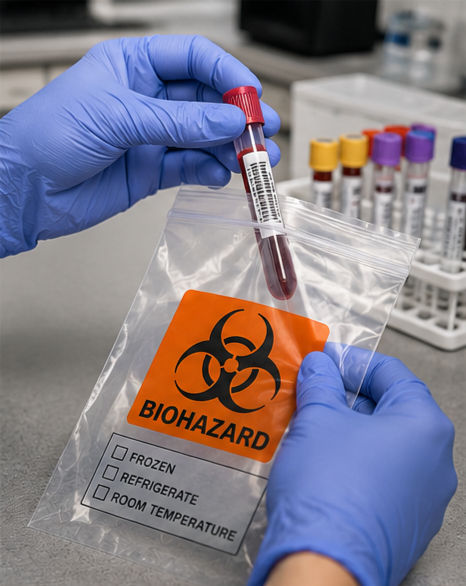
Packaging and Labeling Requirements
Medical specimens are generally packaged according to applicable transportation and laboratory requirements.
Packaging systems may include:
Primary specimen containers
Leak-resistant secondary packaging
Absorbent materials
Protective transport bags
Transport containers or coolers when required
Proper packaging helps reduce the risk of damage during transportation and helps protect personnel handling the shipment.
Labels and accompanying documentation help identify the specimen and support accurate routing to the appropriate laboratory.
Chain of Custody Documentation
Chain of custody refers to the documented transfer of responsibility as a specimen moves from one individual or organization to another.
When a specimen is collected, transported, and delivered, documentation may be used to record:
Pickup location
Date and time of transfer
Receiving party
Delivery confirmation
Transportation records
Chain-of-custody procedures help provide accountability and visibility throughout the transportation process.
Many healthcare organizations utilize chain-of-custody practices to help maintain accurate records and support quality assurance efforts.
Temperature Considerations During Transport
Some specimens require protection from environmental conditions during transportation.
Depending on laboratory requirements, certain specimens may need to be transported within specific temperature ranges to support specimen stability.
To help manage transport conditions, healthcare organizations and medical couriers may utilize:
Insulated transport containers
Cold packs
Temperature-monitoring devices
Temperature-controlled transport procedures
Proper temperature management helps reduce exposure to excessive heat or cold during transit.

Transportation to the Laboratory
Once specimens are packaged and documented, transportation to the laboratory begins.
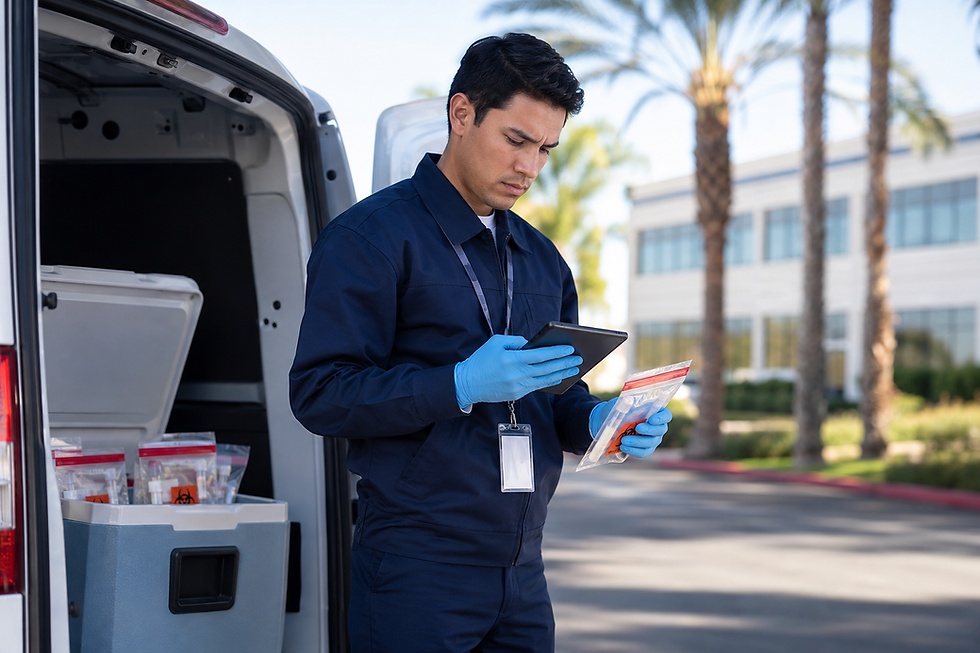
Medical couriers often provide direct transportation between healthcare facilities and laboratories, helping reduce unnecessary handling and transfer points.
Depending on operational needs, transportation may occur through:
Scheduled specimen routes
Same-day transportation
On-demand pickups
STAT or urgent delivery services
The goal is to move specimens efficiently while maintaining appropriate handling procedures throughout the delivery process.
Common Challenges in Specimen Transportation
Healthcare organizations face several challenges when transporting laboratory specimens.
These challenges may include:
Transportation Delays
Unexpected delays can impact delivery schedules and laboratory workflows.
Temperature Exposure
Environmental conditions may affect temperature-sensitive specimens if appropriate precautions are not taken.
Documentation Errors
Incomplete or inaccurate documentation can create operational challenges during specimen processing.
Limited Internal Resources
Many healthcare facilities do not maintain dedicated transportation staff and instead rely on medical courier providers to support specimen movement.
The Role of Medical Couriers
Medical couriers help serve as a critical link between healthcare facilities and laboratories.
By providing dedicated transportation services, medical couriers assist clinics, hospitals, urgent care centers, laboratories, and other healthcare organizations with the movement of important diagnostic materials.
Professional specimen transport services focus on secure handling, timely transportation, chain-of-custody documentation, and reliable communication throughout the delivery process.

Medical Specimen Transport in Ventura County
Healthcare providers throughout Ventura County depend on reliable specimen transportation to support patient care and laboratory operations.
Clinics, urgent care centers, specialty practices, and healthcare organizations frequently require transportation services capable of moving specimens efficiently between collection sites and testing laboratories.
As healthcare logistics continues to evolve, reliable specimen transportation remains an important part of maintaining efficient laboratory workflows.
Conclusion
Safe medical specimen transport involves careful coordination between healthcare providers, laboratories, and transportation professionals. From collection and packaging to chain of custody and final delivery, each step contributes to protecting specimen integrity throughout the transportation process.
By utilizing proper handling procedures, documentation practices, and transportation methods, healthcare organizations can help ensure specimens arrive at laboratories safely and ready for testing.


Comments