

Common Challenges in Medical Specimen Transport

Every specimen collected in a healthcare setting represents an important piece of a patient's care. Whether it's a routine blood sample, pathology specimen, or specialized laboratory test, timely and secure transportation is essential to ensuring accurate results and maintaining quality patient care. While specimen transport may seem straightforward, healthcare providers regularly face challenges that can impact turnaround times, specimen integrity, and overall efficiency.
Maintaining Specimen Integrity
One of the most critical challenges in medical specimen transport is preserving specimen quality from pickup to delivery. Many laboratory samples have strict temperature requirements and limited stability windows. Exposure to excessive heat, cold, or delays can compromise the specimen and potentially require recollection.
Proper packaging, temperature-controlled transport solutions, and adherence to handling protocols help reduce the risk of degradation during transit.

Delayed Deliveries
Time-sensitive specimens often require rapid transportation to ensure testing can be completed within acceptable timeframes. Traffic congestion, route inefficiencies, vehicle issues, and scheduling conflicts can all contribute to delays.
Healthcare facilities rely on dependable transportation partners who understand the urgency of laboratory logistics and can respond quickly when critical specimens need immediate delivery.
Chain of Custody and Documentation
Accurate documentation is essential throughout the transport process. Every specimen should be traceable from the moment it leaves a facility until it reaches its destination.
Missing signatures, incomplete records, or unclear transfer procedures can create accountability concerns and increase the risk of errors. A structured chain-of-custody process helps ensure transparency and confidence throughout the transport journey.

Communication Gaps
Laboratories, clinics, physician offices, and couriers must work together to ensure smooth operations. Communication breakdowns can lead to missed pickups, delivery confusion, or uncertainty regarding specimen status.
Real-time updates, delivery confirmations, and clear communication channels help healthcare organizations stay informed and avoid unnecessary disruptions.
Regulatory Compliance
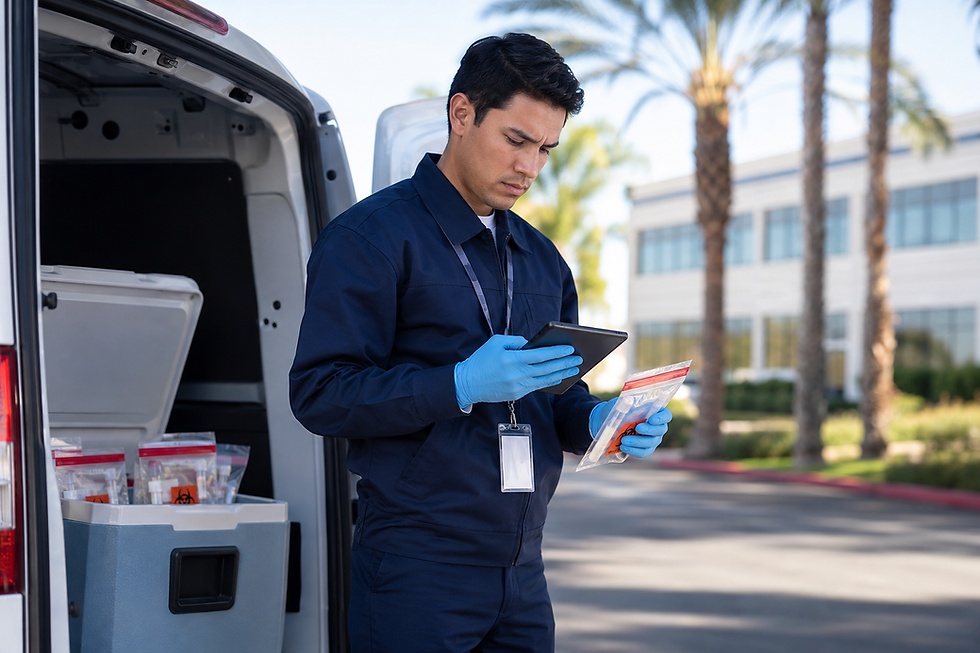
Healthcare logistics involves strict standards regarding privacy, safety, and specimen handling. Couriers must understand proper handling procedures, use appropriate protective equipment when necessary, and maintain compliance with applicable regulations.
Failure to follow established procedures can increase liability and potentially impact patient care outcomes.
Managing Unexpected Demand
Healthcare facilities frequently experience fluctuations in specimen volume. Seasonal illnesses, staffing shortages, and unexpected patient surges can quickly increase transportation needs.
Having access to reliable backup or overflow courier support can help facilities maintain continuity when regular transportation resources become overwhelmed.
The Importance of Reliable Medical Courier Services
Medical specimen transport is much more than moving packages from one location to another. It requires attention to detail, accountability, timeliness, and an understanding of the unique requirements associated with healthcare logistics.
By partnering with experienced medical courier providers, healthcare organizations can reduce transport-related risks, maintain specimen integrity, and support faster laboratory turnaround times that ultimately contribute to better patient care.
At Coastal Med Logistics, we understand the importance of dependable specimen transportation. Our focus is on secure handling, chain-of-custody accountability, and responsive service designed to support healthcare facilities throughout Ventura County and surrounding areas.


Comments