

How Chain of Custody Protects Medical Specimens Throughout Transport

In healthcare, the accuracy of laboratory testing depends on more than advanced diagnostic equipment and skilled laboratory professionals. Before a specimen ever reaches a laboratory, it must be collected, documented, transported, and delivered under strict procedures designed to protect its integrity. One of the most important safeguards in this process is the chain of custody.
For healthcare providers throughout Los Angeles, Ventura County, Orange County, and surrounding Southern California communities, maintaining a documented chain of custody helps ensure medical specimens arrive safely, securely, and ready for accurate testing.
What Is Chain of Custody?
Chain of custody refers to the documented process that tracks a medical specimen from the moment it is collected until it reaches its final destination. Every transfer, handling event, and transportation step is recorded to create a clear record of accountability.
This process helps healthcare organizations verify:
Who collected the specimen
When the specimen was collected
How the specimen was stored
Who transported the specimen
When the specimen was delivered
Who received the specimen at the laboratory
By maintaining a complete record, healthcare providers can demonstrate that specimens remained secure and properly handled throughout the transportation process.

Why Chain of Custody Matters in Healthcare
Medical decisions rely on accurate laboratory results. If a specimen is lost, mislabeled, contaminated, or exposed to improper conditions during transport, test results may be delayed or compromised.
A strong chain of custody process helps reduce risks by ensuring accountability at every stage of transport.
Benefits include:
Improved Patient Safety
Patients depend on accurate diagnostic testing for treatment decisions. Proper specimen tracking helps reduce the likelihood of handling errors that could affect laboratory results.
Regulatory Compliance
Healthcare organizations must follow strict standards regarding specimen handling and transportation. Maintaining detailed records helps support compliance with healthcare regulations and laboratory requirements.
Reduced Risk of Lost Specimens
Documented tracking allows healthcare providers and laboratories to monitor specimen movement throughout the delivery process, reducing the chance of misplaced or missing samples.
Greater Accountability
Every individual who handles a specimen becomes part of the documented record. This level of accountability helps identify potential issues quickly and supports quality assurance efforts.
The Role of Medical Couriers in Maintaining Chain of Custody
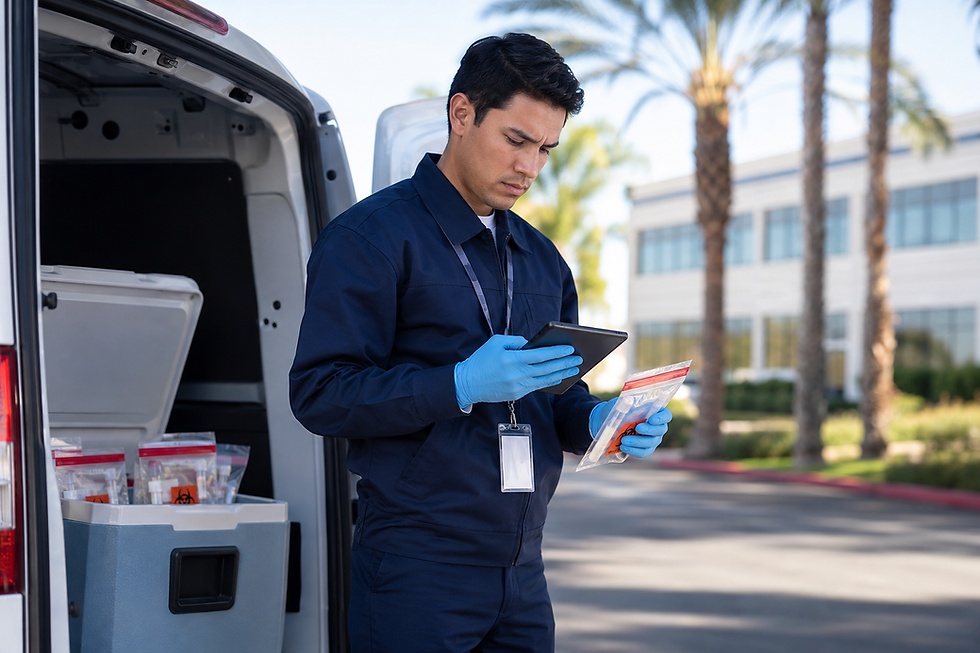
Professional medical couriers play a critical role in preserving chain of custody during transportation.
Unlike standard delivery services, healthcare logistics providers are trained to handle laboratory specimens according to established healthcare protocols. Medical couriers understand the importance of proper documentation, secure handling procedures, and temperature-controlled transport when required.
Throughout Los Angeles and neighboring communities, healthcare facilities often rely on dedicated medical courier services to transport:
Blood specimens
Laboratory samples
Diagnostic testing materials
Pathology specimens
Medical records
Pharmaceuticals
Time-sensitive healthcare materials
Each transport requires careful documentation and adherence to chain of custody procedures.

Temperature Control and Specimen Integrity
Many medical specimens require specific temperature conditions during transport. Even brief exposure to improper temperatures can impact specimen quality and testing accuracy.
Chain of custody procedures often work alongside temperature monitoring protocols to verify that specimens remain within required ranges throughout transportation.
This is particularly important for healthcare providers operating across the large geographic area of Southern California, where transportation routes may extend from Los Angeles to Ventura County, Orange County, Riverside County, and surrounding regions.
Professional healthcare logistics providers use specialized transport equipment and handling procedures to help protect specimen integrity during transit.
Supporting Healthcare Facilities Across Los Angeles
Hospitals, physician offices, diagnostic laboratories, specialty clinics, and outpatient healthcare centers throughout the Los Angeles region depend on reliable specimen transportation every day.
A documented chain of custody helps create confidence that specimens are being handled according to established standards from pickup through delivery.
Whether transporting specimens across downtown Los Angeles, throughout Ventura County, or between healthcare facilities across Southern California, maintaining visibility and accountability remains essential to protecting patient care.

Choosing a Healthcare Logistics Partner
When selecting a medical courier service, healthcare organizations should look for providers that prioritize chain of custody procedures, documentation accuracy, secure handling practices, and timely transportation.
An experienced healthcare logistics partner understands that every specimen represents a patient waiting for answers. Maintaining a clear and documented chain of custody helps ensure those specimens arrive safely, securely, and ready for testing.
Conclusion
Chain of custody is a fundamental component of healthcare logistics and medical specimen transportation. By documenting every step of a specimen's journey, healthcare providers can help protect specimen integrity, support regulatory compliance, reduce transportation risks, and contribute to accurate diagnostic outcomes.
For healthcare facilities throughout Los Angeles, Ventura County, Orange County, and surrounding Southern California communities, a reliable chain of custody process is more than a transportation requirement—it is an essential part of delivering quality patient care.


Comments